

1. The Mechanics of Private Terminal Customs Clearance
Unlike commercial aviation hubs where thousands of passengers pass through central customs halls simultaneously, private aviation handles border formalities on a boutique scale. Fixed-Base Operators (FBOs) house dedicated customs, immigration, and agricultural quarantine offices or maintain direct protocols with border protection agencies to service arriving and departing private flights.
When an international private jet touches down, border officials are stationed directly inside the private terminal or meet the flight upon arrival. Passports, visas, and customs declarations are processed inside secure, private executive lounges, allowing principals to complete legal requirements within minutes without stepping foot near a public terminal.
2. Eliminating Commercial Delays and Passenger Queues
Commercial flight arrivals are notorious for bottlenecks at passport control, where passengers can spend anywhere from 30 minutes to over two hours waiting in lines. Furthermore, luggage retrieval introduces additional delays as passengers wait for bags to travel from the cargo hold.
Private terminal clearance completely removes these pain points. Because passenger manifests are intimate—typically ranging from one to sixteen travelers—baggage is unloaded directly from the aircraft belly and handed over immediately to ground coordinators or loaded straight into awaiting tarmac-side vehicles, ensuring total operational continuity.
Journey with Confidence
Your health and well-being are our priority. Experience world-class medical excellence while exploring the wonders of Istanbul.
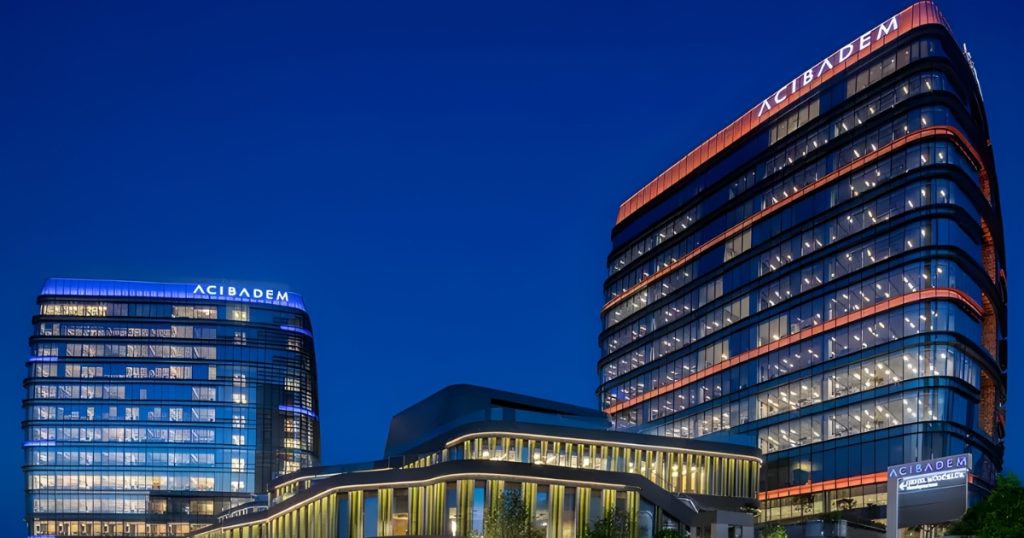
Acıbadem Hospitals Group:
Global Excellence in Healthcare
While you travel across global financial hubs and private aviation terminals, your well-being is protected by a future-focused healthcare leader. Acıbadem provides world-class medical services, executive health screenings, and concierge care with absolute privacy.
Travel with the assurance that you and your loved ones are in the most capable hands.
 Explore Executive Medical Services →
3. Advanced Passenger Information (API) & Border Compliance
Expedited customs processing relies on meticulous pre-flight preparation. Prior to departure, the private jet operator or handling agent transmits Advanced Passenger Information (API), passport copies, and flight manifests to the destination country's customs and border control authorities.
This pre-arrival data submission allows border officials to run security checks and clear the flight before the aircraft enters national airspace. As a result, when the jet lands, customs agents are fully prepared, transforming what would otherwise be a rigorous inspection into a quick, frictionless verification process.
4. Discrete VIP Lounges and Mobile Clearance Units
Privacy is a foundational element of executive travel. Public airport immigration areas expose travelers to media presence, corporate competitors, or general onlookers. FBO customs processing protects confidentiality by conducting all checks behind closed doors within private executive lounges.
In certain jurisdictions or specialized international airports, mobile border clearance teams travel directly to the FBO ramp, processing VIP passengers inside the private terminal or even onboard the aircraft when diplomatic or high-security protocols dictate maximum discretion.
Transmitting Advanced Passenger Information (API) prior to departure enables border officials to pre-clear flights, reducing customs processing times at the FBO to mere minutes.
5. FBO Border Clearance vs. Commercial Processing Matrix
Review the operational differences between private terminal customs clearance and standard commercial processing below:
FBO Customs: Rapid 5–15 minute clearance
Commercial: 30–120 minute queue waits
Advantage: Zero public line exposure
FBO Customs: Private executive lounges
Commercial: Crowded central customs halls
Security: Complete protection from crowds
FBO Customs: Direct aircraft-to-car transfer
Commercial: Shared baggage carousels
Efficiency: No lost luggage exposure
FBO Customs: Pre-cleared via API manifests
Commercial: On-arrival manual scanning
Coordination: Handled by FBO agents

Enrich Your Exploration
Enhance your luxury travel experience with our hand-picked partners offering five-star stays and seamless driving in Turkiye.

Four Seasons:
Bosphorus Waterfront Luxury
Land at your private FBO and transfer directly to a historic Ottoman waterfront palace. Experience unmatched hospitality along the Bosphorus.
 Book Your Stay →

Rent a Car Turkey:
Executive Fleet & Airport Handover
Enjoy total freedom on the ground. Rent premium SUVs, cabriolets, and luxury sedans with direct private jet terminal handover.
 Get Your Vehicle →
Frequently Asked Questions About FBO Customs Clearance
Key answers regarding private terminal border processing, API data submission, and VIP privacy.
How does customs clearance work at a private aviation terminal (FBO)?
Border control officers are stationed directly inside the private FBO lounge or meet arriving flights on-site, processing passports and declarations in a private executive environment.
Do I still need to present passport and visa documents for international flights?
Yes. International legal requirements remain fully in effect. However, documentation is submitted in advance via Advanced Passenger Information (API) to ensure rapid on-arrival verification.
How long does international customs clearance take at an FBO?
With pre-submitted manifests, private terminal customs clearance typically takes between 5 to 15 minutes, bypassing commercial queues entirely.
Is luggage inspected inside the private terminal?
Baggage is unloaded directly from the aircraft under secure supervision, and any required customs inspections are conducted discreetly within the private facility without public exposure.
Are private customs services available 24/7 at major international airports?
At major executive gateways—such as Istanbul's aviation hubs—FBO customs services operate around the clock, though advance coordination is required for off-peak or midnight arrivals.
Border Security & Customs References
- World Customs Organization (WCO): Guidelines on General Aviation Border Facilitation and Passenger Manifest Standards.
- International Civil Aviation Organization (ICAO): Annex 9 – Facilitation: International Standards and Recommended Practices.
- Directorate General of Customs Enforcement (Türkiye): Private Terminal Customs Clearance and Executive Passenger Protocols.
